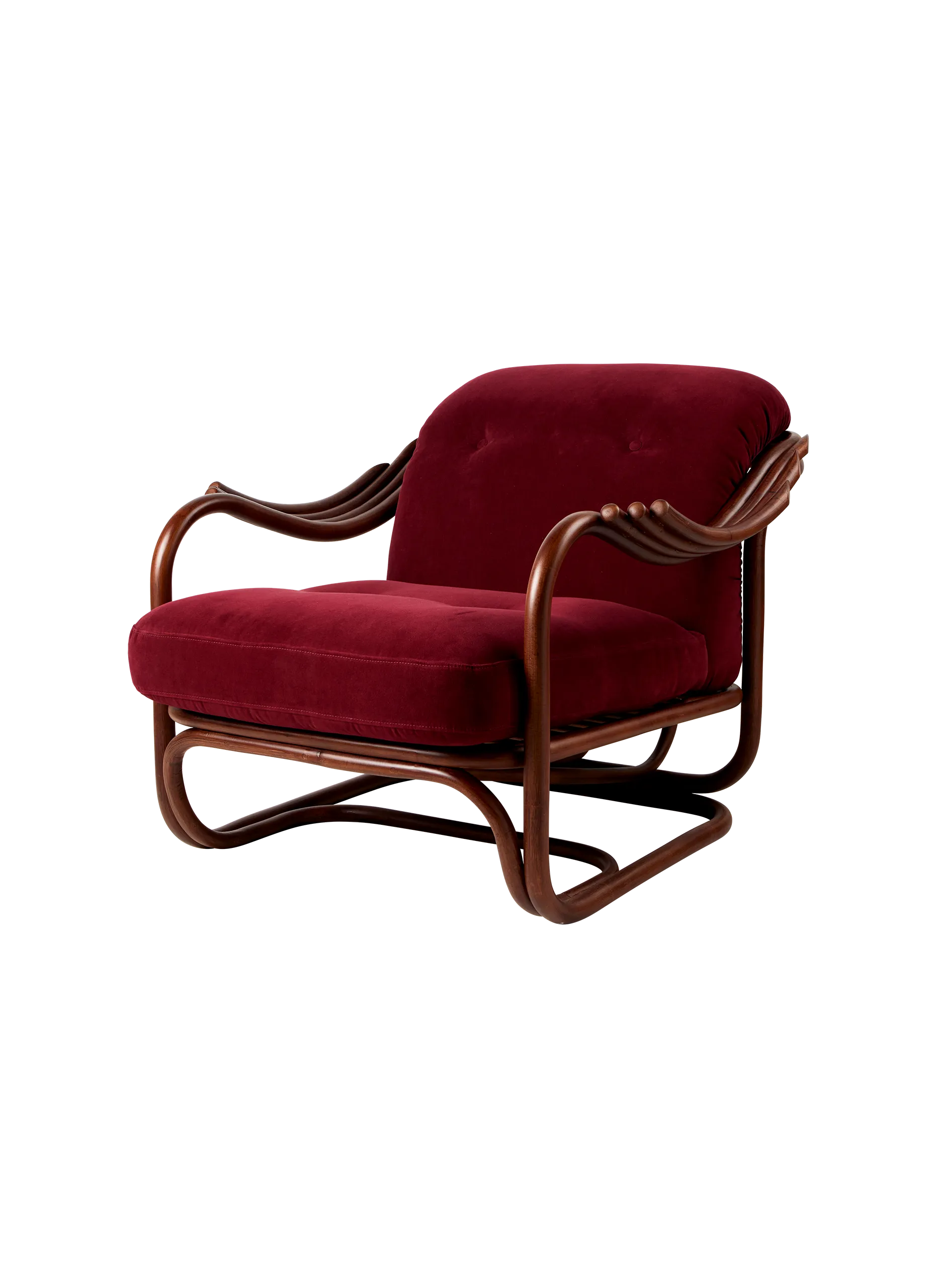
Poltrona Tria Lounge Chair
Design by Carlo de CarliSeamlessly merging the inherent beauty and charm of natural rattan with meticulous ergonomic precision, the Poltrona Tria Lounge Chair embodies both artistry and function. Constructed almost solely from steam-bent rattan canes, curved and fixed into place by hand, it features a distinctive set of gracefully contoured armrests, creating a visually striking yet supremely comfortable seat. Enhanced by two deep-set cushions, the Poltrona Tria delivers an exceptional lounging experience in any indoor setting - while the natural material expressions bring a welcome touch of the outdoors into the home.
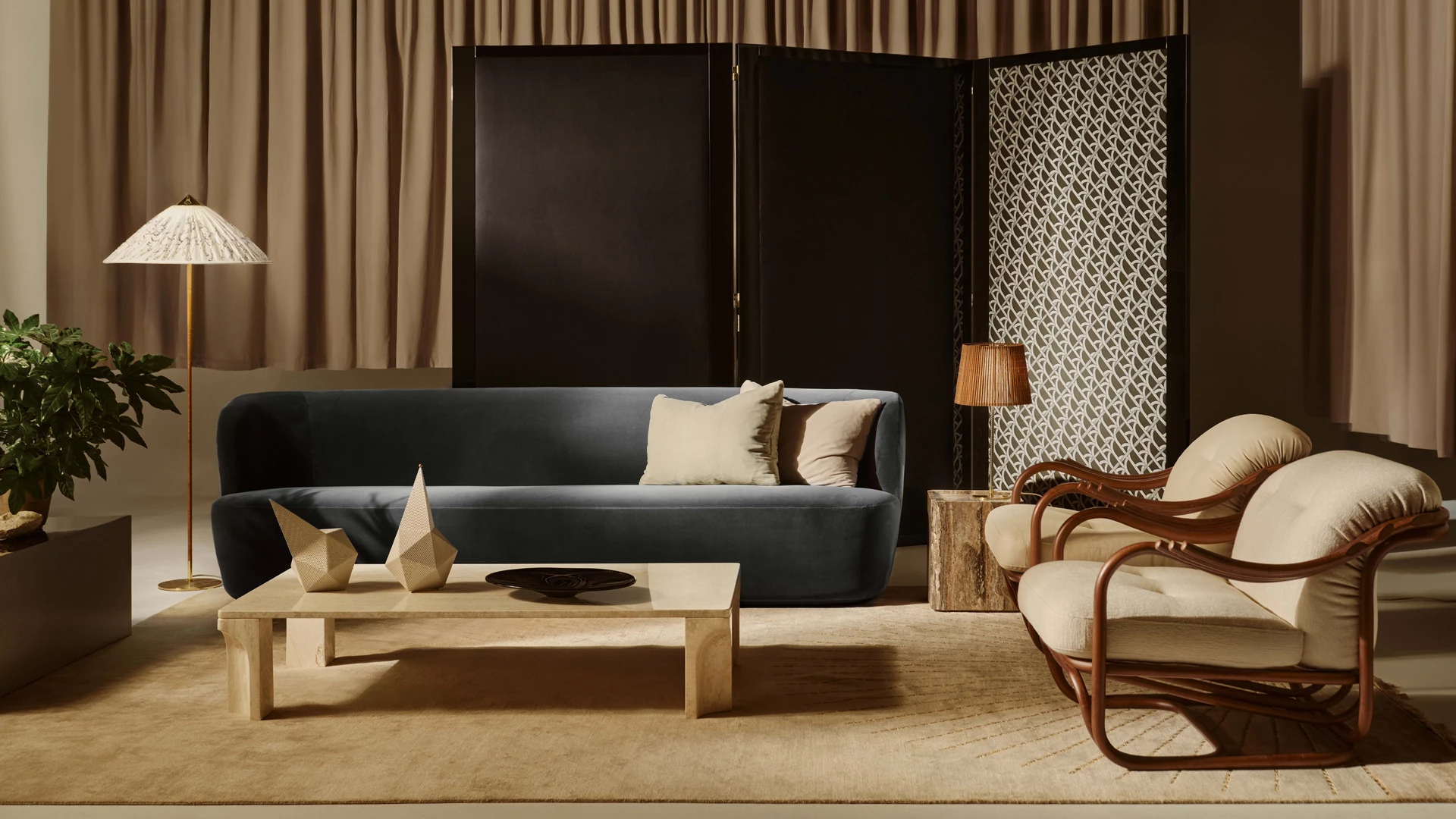
Named Poltrona Tria in reference to the three elements that make up each armrest, the lounge chair has a lightweight yet robust frame constructed from natural rattan canes, steambent carefully by hand, and finished with a chestnut semi-gloss coat. GUBI has upgraded the fabric webbing of the 1970s design with a rattan grid, improving support and enabling a cohesive all-rattan composition. The only non-rattan element is a leather band securing the backrest canes - a small yet significant functional detail of De Carli’s design, which helps enhance the organic expression of the chair’s materials.
CARLO DE CARLI
Carlo De Carli (1910-1999) was not only an architect and designer, who made a profound impact on design in the 20th century, but also one of Italy’s leading and most respected professors, who left a fundamental mark of theoretical reflections and ethics of behaviour in an entire generation of architects. He graduated in architecture from the Politecnico di Milan in 1934, a university in which he was strongly connected to throughout his career, being Dean of the Faculty of Architecture from 1965 to 1968 and teaching there until 1986. A respected academic and writer, his philosophy focused on the integration of space, material and the human body and gesture, and with this ideology he effectively engaged a dialog between design, universities and the craftsmanship world effectively engaged a dialog between design, universities and the craftsmanship world.