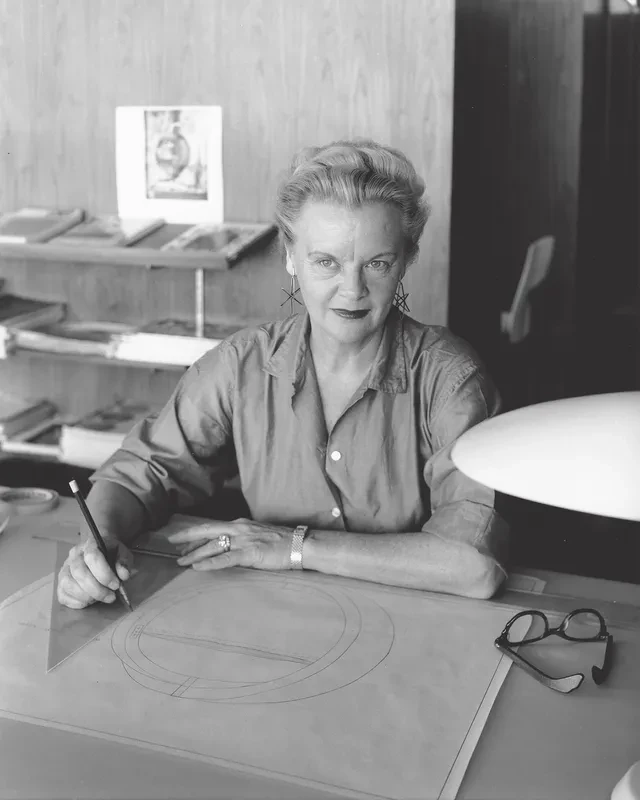
GRETA M. GROSSMAN
Greta Magnusson Grossman (1906-1999) maintained a prolific forty-year career on two continents: Europe and North America, and operated as mover and shaker in the male dominated world of mid-century modern design.
TRAVELING ACROSS THE ATLANTIC
Grossman's achievements were many and encompassed industrial design, interior design and architecture. In 1933, having successfully completed her fellowship at the renowned Stockholm arts institution, Konstfack, she opened Studio, a combined store and workshop in Stockholm. In the same year she married jazz musician Billy Grossman. In 1940, the couple decided to emigrate to the United States and embarked on a harrowing journey across the Atlantic aboard the Japanese liner Nakura Maru, never reaching their intended destination of New York, but eventually arriving in San Francisco.
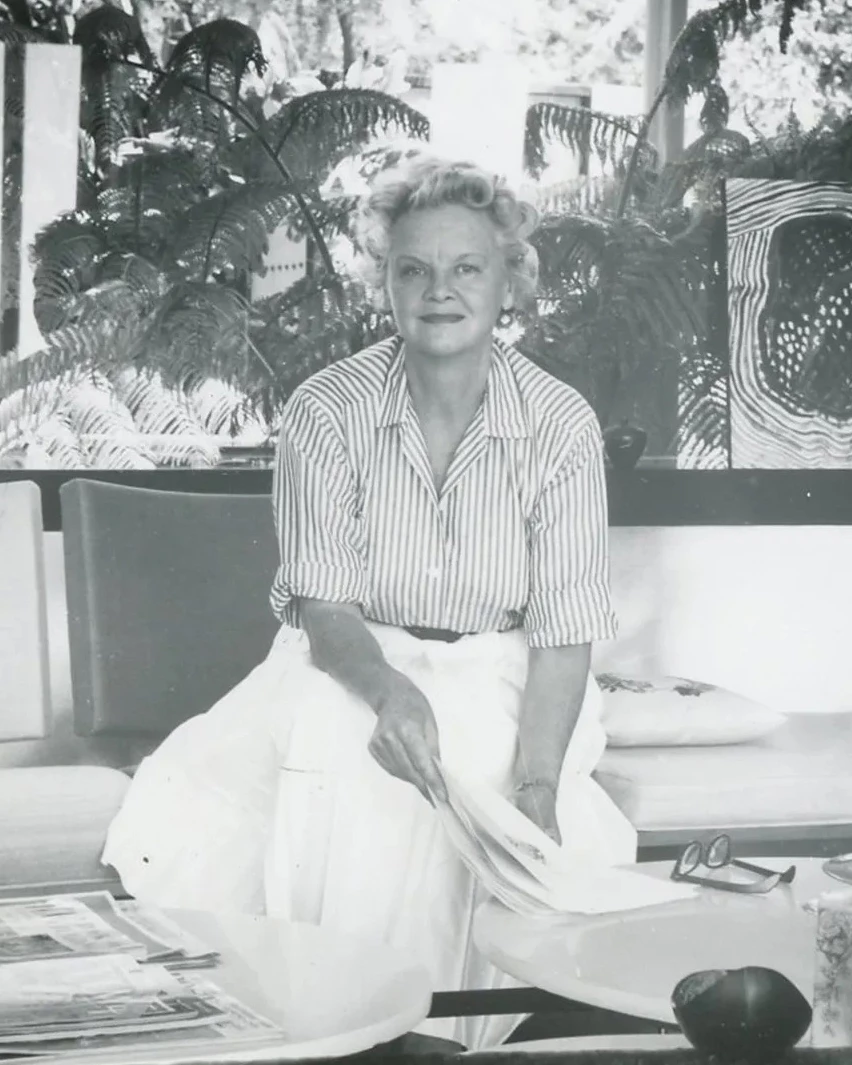
DESIGNING & DECORATING SPACES
Grossman was clearly influenced by the principles of the Case Study Houses - the series of postwar experiments in American residential architecture commissioned by Arts & Architecture magazine. From the 1940s to the 1960s, Grossman was the only female architect in Los Angeles to own an independent practice. Grossman would often complete her builds with custom textiles, ceramics, furniture and lighting fixtures, and it is her furniture - such as the Modern Line Sofa and 62 Series Desk and her lighting designs, including the Gräshoppa Lamp and Cobra Lamp, for which she is best known today.
INTERNATIONAL RECOGNITION
While Grossman is the architect behind more than 15 homes spanning the globe from California to Sweden, she is most noted for her industrial designs where the Gräshoppa Floor Lamp and Cobra Table Lamp belongs to the most famous works. Grossman's work often appeared in Arts & Architecture magazine and was exhibited at museums such as Museum of Modern Art (MoMA) in New York and the National Museum in Stockholm throughout the 1940s and ’50s - her Cobra Lamp was even recognized with a Good Design Award in 1950.