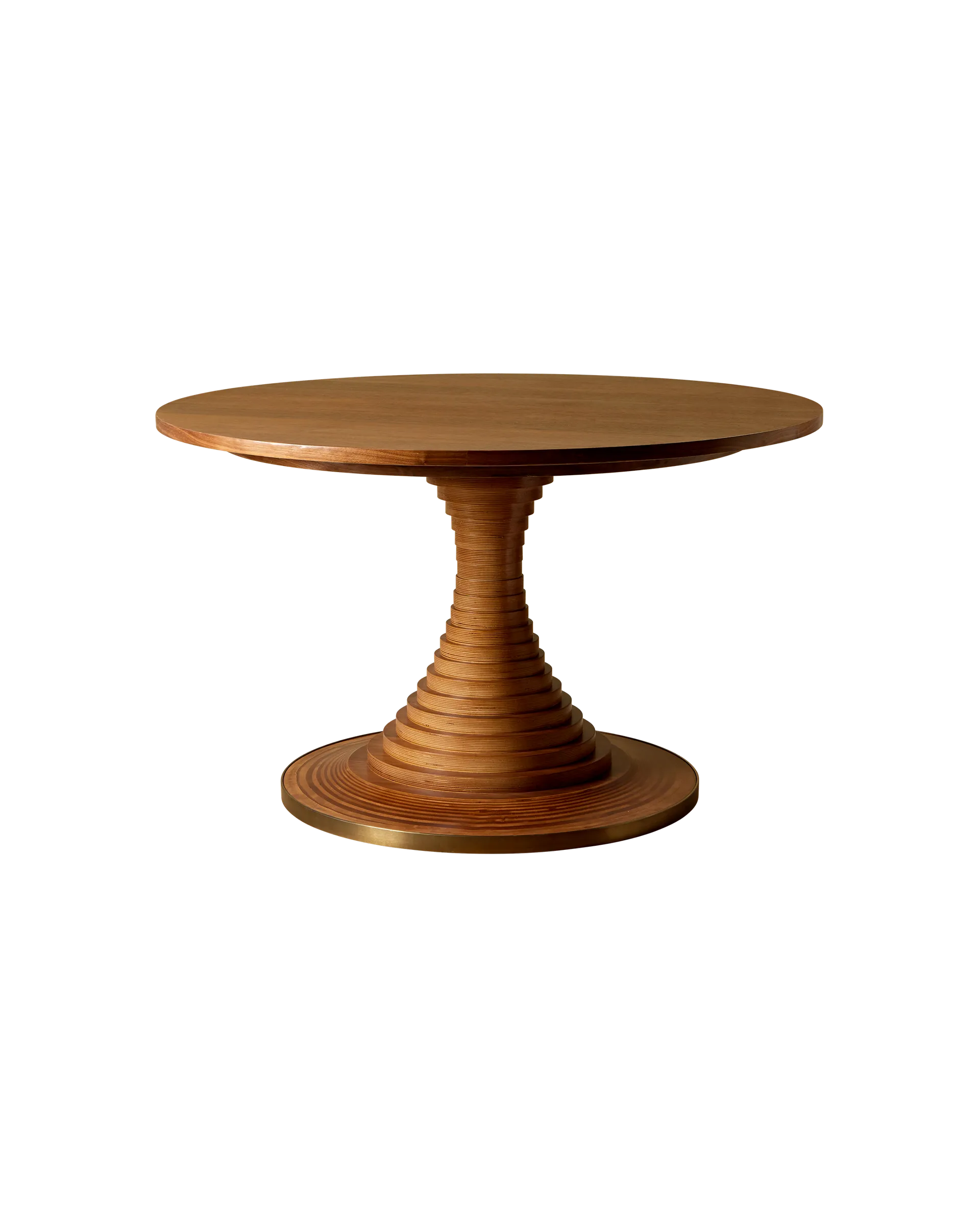
Tavolo a Dischi Dining Table
Design by Carlo de CarliDesigned in 1963 by the influential Italian architect Carlo De Carli, the Tavolo a Dischi dining table is an elegant marriage of function and form, combining structural innovation, expressive materiality, and practical excellence. The round table is ingeniously constructed from 3cm-thick FSC® Mix-certified birch plywood discs of varying diameters and from other responsible sources (FSC® C176589), stacked around a concealed metal core, to form an elegant curve that supports a generous tabletop in walnut veneer, now available in two sizes. A burnished brass-toned steel band at the base adds material contrast while providing protection. Equally suited to dining, meetings, or gatherings, the Tavolo a Dischi is a centerpiece that brings people together, fostering connection and conversation.

De Carli recognized that the primary role of a dining table was not to be a practical surface, but rather to be a forum for human interaction, and that - intimate and egalitarian - round tables are especially well suited as places of encounter and conversation. Seating up to six people, the Tavolo a Dischi exemplifies this, supporting both the ritual of dining and the exchange of ideas by creating a shared space for meaningful moments and memories.
CARLO DE CARLI
Carlo De Carli (1910-1999) was not only an architect and designer, who made a profound impact on design in the 20th century, but also one of Italy’s leading and most respected professors, who left a fundamental mark of theoretical reflections and ethics of behaviour in an entire generation of architects. He graduated in architecture from the Politecnico di Milan in 1934, a university in which he was strongly connected to throughout his career, being Dean of the Faculty of Architecture from 1965 to 1968 and teaching there until 1986. A respected academic and writer, his philosophy focused on the integration of space, material and the human body and gesture, and with this ideology he effectively engaged a dialog between design, universities and the craftsmanship world effectively engaged a dialog between design, universities and the craftsmanship world.