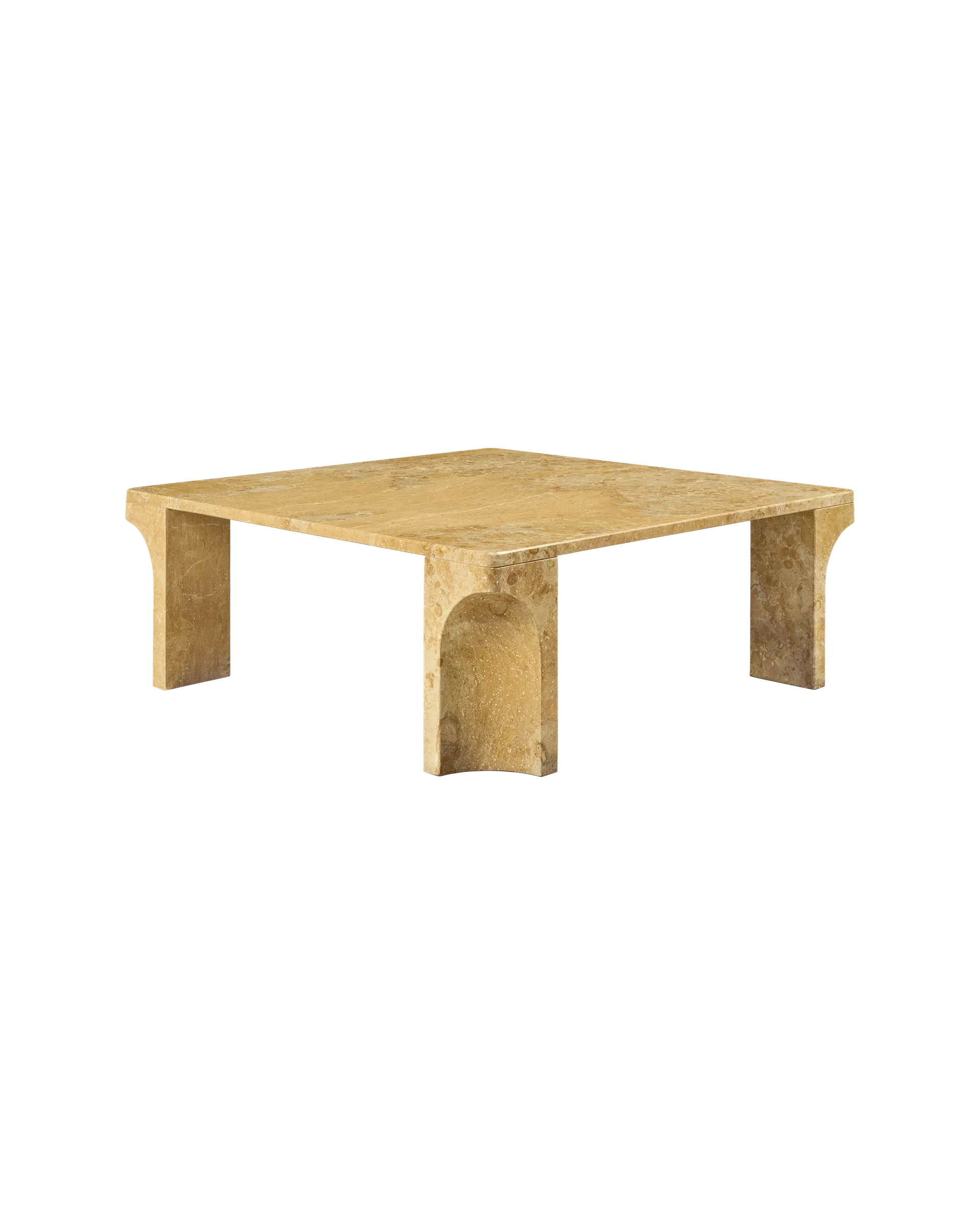
Doric Coffee Tables
Design by GamFratesiThe defining feature of the Doric Table is the inward curve of the legs, the result of material subtraction from a simple shape. What could have been a monolithic, hard-edged profile is given lightness and softness by carving into each of its four legs - a contemporary reinterpretation of the fluted detailing often found in the Doric column. As well as balancing historic and contemporary, the table is both curved and geometric, hard and soft, with the rectangular form of the tabletop counterbalanced by its gently rounded corners and the decorative contours of the carved legs.
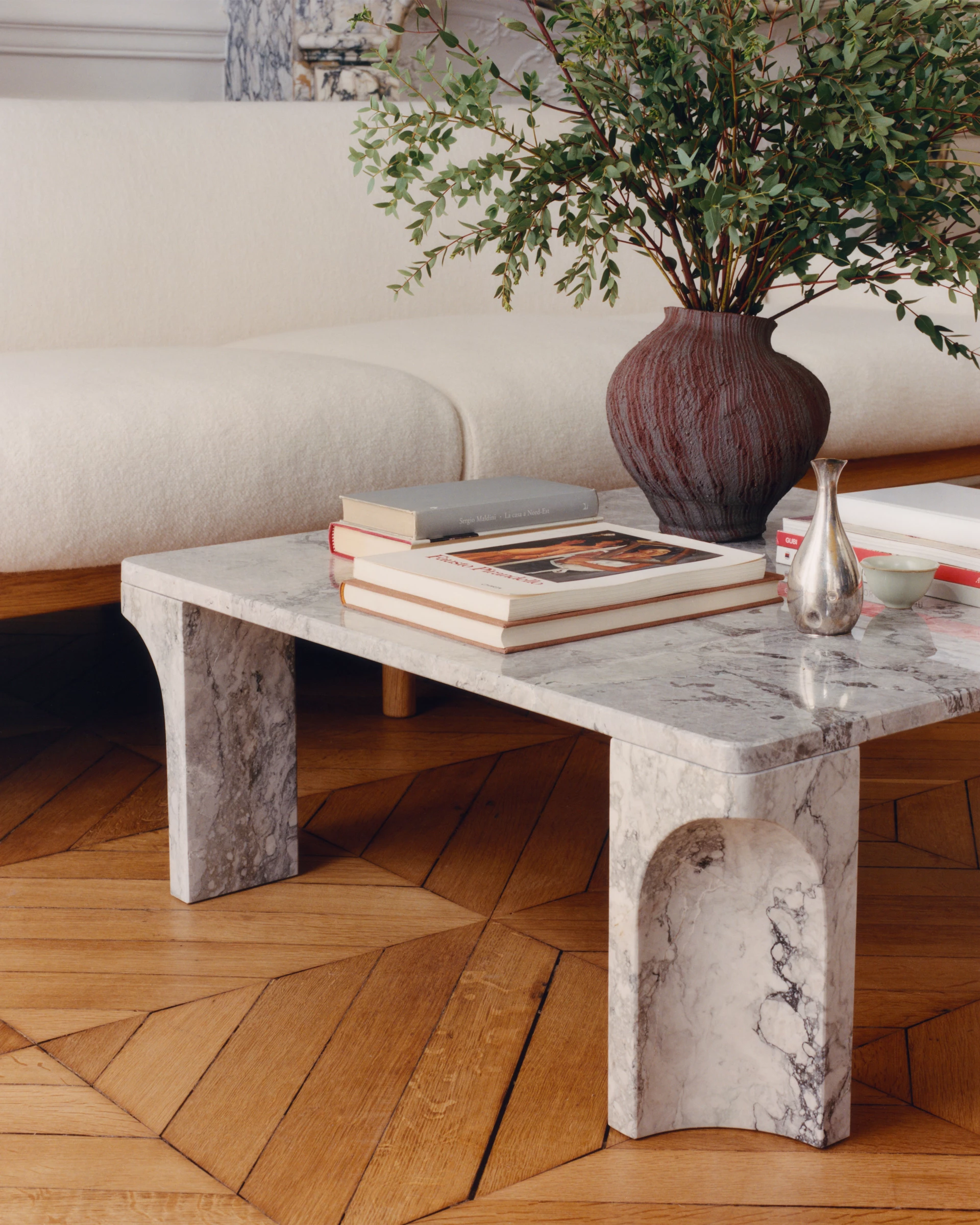
NEW MARBLE EXPRESSIONS
Grounded in natural stone, the Doric Coffee Table by GamFratesi continues its exploration of material through two new marble expressions. While the sculptural form remains rooted in the restrained language of Classical architecture, the new marbles shift the atmosphere of the design through depth, movement, and contrast.
GAMFRATESI
GamFratesi's design takes its creative drive from a fusion of tradition and renewal and in an experimental approach to their chosen materials and techniques. With their diverse traditional background, they draw on the classic Danish furniture and craft tradition as well as the timeless Italian intellectual and conceptual approach. Understanding a tradition and addressing it actively in the workshop makes it possible to expand on it.