SUSTAINABILITY
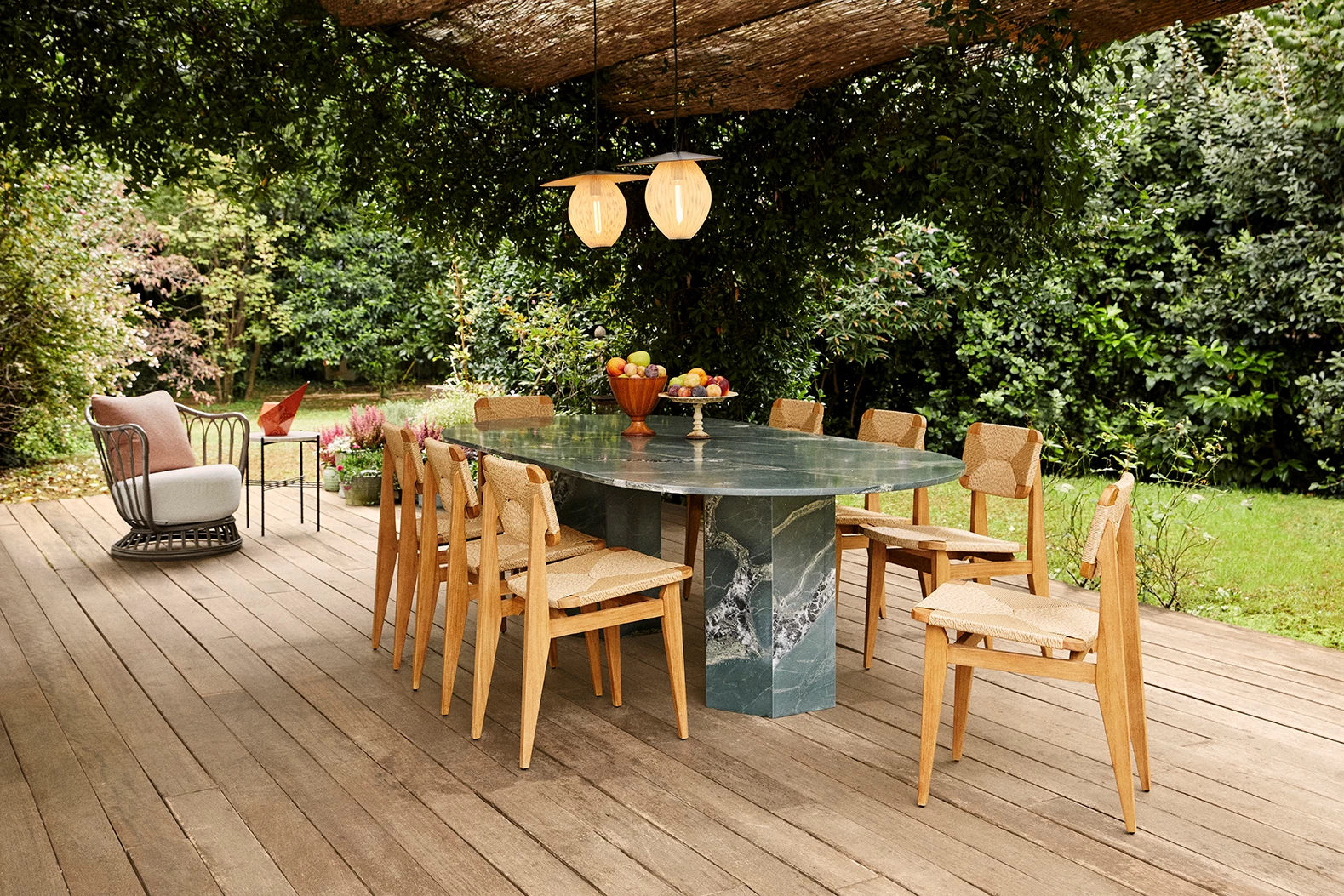
GUBI is the global design house where timeless modern icons and the creative talents of today meet and mingle – a century of design brilliance in one daring, definitive, and ever-evolving collection. GUBI’s business model is focused on creating thoughtful, iconic design objects, imbued with meaningful stories and crafted to feel timeless.
Our ESG Strategy focuses on the improvement of GUBI’s environmental footprint, engagement of employees, and conducting business with compliance and integrity. Our commitment to sustainability includes understanding and measuring the way our processes and products impact the environment.
READ OUR ESG REPORTS
OUR STANDARD
In 2019, GUBI joined the UN Global Compact and has since then been committed to the UNGC’s Ten Principles for responsible business conduct within the areas of human rights, labor, environment, and anti-corruption. We are committed to upholding and respecting the basic human rights of all individuals. We believe that any violation of human rights is unacceptable and will not be tolerated under any circumstances. We strictly prohibit the use of child labor and forced labor in any form.
GUBI has established a governance framework to support responsible business conduct and environmental stewardship across its operations and value chain. The framework is anchored in GUBI’s Code of Conduct, approved by the Board of Directors and overseen by Executive Management. Workplace standards are governed by the Internal Code of Conduct and the Diversity, Equality and Inclusion (DEI) Policy, which promote fair treatment, non-discrimination and equal opportunity.
GUBI maintains supporting governance policies addressing business ethics and compliance, including anti-bribery and anti-corruption commitments, sanctions compliance, data ethics, IT security and a whistleblower mechanism enabling confidential reporting of concerns. Together, these policies provide the foundation for responsible decision-making and business conduct.
OUR COMMITMENTS
GUBI has established science-based greenhouse gas (GHG) emission reduction targets covering Scope 1 and 2 emissions. We are committed to reducing Scope 1 and 2 GHG emissions by 42% by 2030 compared to a 2020 baseline, and to reducing Scope 3 emissions by 30% by 2030 compared to a 2022 baseline.
To measure the impact of our products on biodiversity, GUBI established a baseline in 2022. This provides a comprehensive understanding of how our products affect the environment, considering the state of natural resources worldwide, based on a life-cycle assessment approach. We ambition to continuously improve GUBI’s data and calculations on environmental impact.
MATERIAL MATTERS
The environmental impacts associated with GUBI’s products are closely linked to the materials used in the design, production and packaging. We are ensuring that the wood used in GUBI’s products is legally harvested and not associated with deforestation or forest degradation, by collecting data from the suppliers to meet the requirements for the EU Deforestation-free Regulation (EUDR). In 2025, 36% of our wood-based products were FSC®-certified (FSC® C176589). Gubi has introduced recycled plastic into key seating products. In 2025, 93% of seating products sold contained at least 50% recycled plastic. The Grace outdoor collection was launched containing 100% recycled plastic and the GamFratesi’s collection has been redeveloped using a recycled-plastic composite, comprising over 50% recycled plastic, while maintaining the same design and functionality. All plastic shells of chairs, bar stools, and stools used in the Beetle, Bat and GUBI 3D collections are produced using 50% recycled plastic. GUBI has introduced its own sustainable and compliance product development and packaging guidelines to support product development teams and suppliers in designing products and packaging while maintaining product protection and functionality. We are continuously working to gather data from suppliers to ensure compliance with the Regulation (EU) 2025/40 on packaging and packaging waste (PPWR).
fabrics and leather
GUBI has carefully selected an upholstery collection that offers quality, durability, and a timeless aesthetic. This recommended upholstery collection has been tested extensively across our furniture range to ensure optimal results every time.
A significant part of our recommended upholstery collection has specific sustainability credentials. Many of our recommended fabrics contain recycled materials, ranging from 10% to 100% in their composition. Our goal is to expand this collection with more upholsteries made from recycled materials that meet gold standards and align with our sustainability commitments. We are committed to continuously enhancing our sustainability practices by adding more environmentally responsible options to our collection.
Our recommended upholstery collection includes fabrics and leathers that comes with various certifications such as GreenGuard Gold, OekoTex 100, EU Eco Label, Environmental Product Declaration, Health Product Declaration, Nordic Swan, Blue Angel, and Indoor Climate Label.
wood and veneers
Wood is a renewable material and one of the best for creating furniture. GUBI recognizes the importance of responsible wood selection when designing its products. GUBI initiated our first biodiversity-related project by sourcing wood that is FSC® certified (In 2022, GUBI obtained FSC® certification, with 10% of its wood products being FSC® certified).
GUBI aims to increase this percentage of FSC® certified wood products to 90% by 2026. Additionally, GUBI's wood products adhere to European Union Timber Regulation (EUTR), and our veneered products comply with regulations for the determination of formaldehyde and other carbonyl compounds.
[FSC-C176589]
steel and aluminum
Steel and aluminum are highly recyclable materials, meaning that they can be reused with minimal waste. To ensure the responsible sourcing and manufacturing of these materials, we require our suppliers sign our code of conduct. Our steel and aluminum components are designed in a way that they can easily be disassembled and recycled.
polypropylene
All plastic shells of chairs, bar stools, and stools used in the Beetle, Bat, and GUBI 3D Collections are recyclable, easily disassembled, and sorted for recycling. They are made from virgin polypropylene, which ensures optimal strength, durability, and product lifespan. Additionally, GUBI is committed to using recycled plastic material for production and is working on projects to make this a reality.
foam & feathers
We use various foam layers and densities for our upholstery that adhere to strict fire regulations and are treated with fire retardants. While these fire retardants are necessary for fire prevention, we are actively researching and exploring eco-friendly alternatives. However, we ensure that the foams used in our Beetle and Bat Collections are REACH compliant, and their composition and environmental impact are closely monitored.
For pillow upholstery, we use a combination of foam and feathers. We always prioritize RDS-certified feathers to ensure responsible sourcing. Our upholstery glue and activators are primarily water-based and have little to no toxicity.
packaging
GUBI is committed to reducing energy consumption during transportation by designing its products in a way that maximizes disassembly and minimizes shipment size. This approach is especially beneficial for tables and chairs. GUBI has conducted thorough research on packaging materials to ensure that products are protected while continuously improving packing practices.
CARE AND MAINTENANCE
GUBI emphasizes the significance of proper care and maintenance for each design to help extend its lifespan.