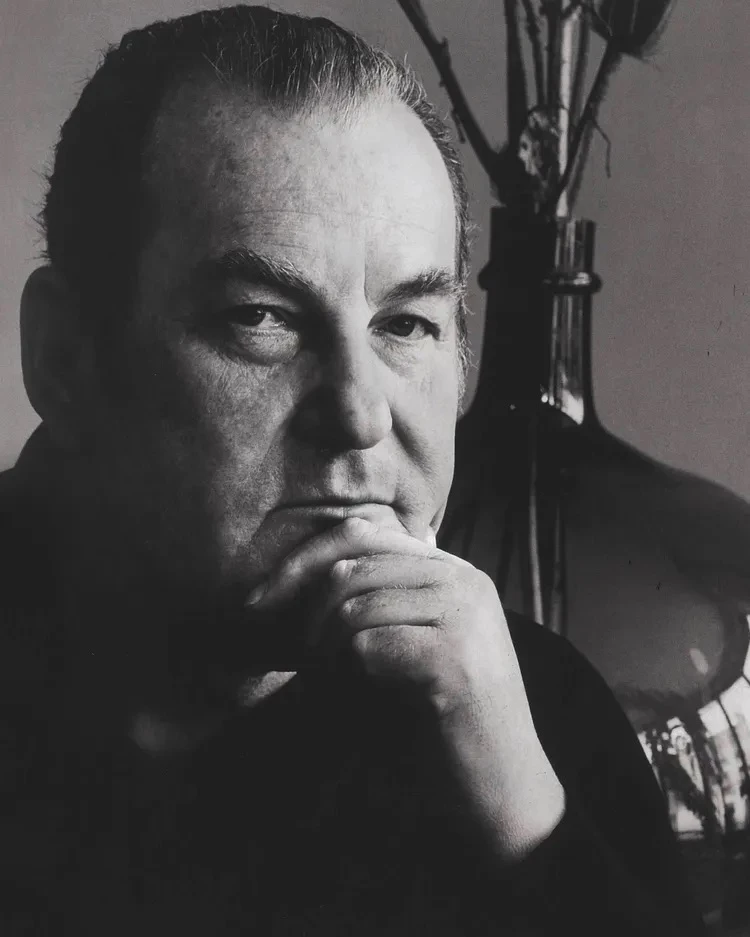
MATHIEU MATÉGOT
Mathieu Matégot (1910-2001) was a versatile, independent, and self-taught Hungarian designer, architect and artist. He spent most of his life in his beloved Paris, where he settled in 1931 after traveling to Italy and the United States, studying at Budapest’s School of Art and Architecture, and gaining experience in set design, window dressing, fashion, and tapestry. In 1939, Matégot volunteered for the French army but was captured and held prisoner in Germany until his escape in 1944. Matégot’s wartime captivity was important to his later career, as it was here that he first learned about the techniques and potential of sheet metal while working in a mechanical accessories plant.
BAGDAD PORTABLE LAMP
Designed in 1954, the Bagdad Lamp embodied the quintessential characteristics of Mathieu Matégot’s approach to lighting design: playful expression, signature material, and space-age aesthetic. Made with Matégot’s signature ‘rigitulle’ technique, whereby sheet metal is folded and perforated to create a lace-like effect - the Bagdad Lamp was inspired by the lanterns of the Middle East, hence its name. Matégot gave this classic style a distinctly futurist makeover. As a result, the Bagdad resembles a cubist sculpture.
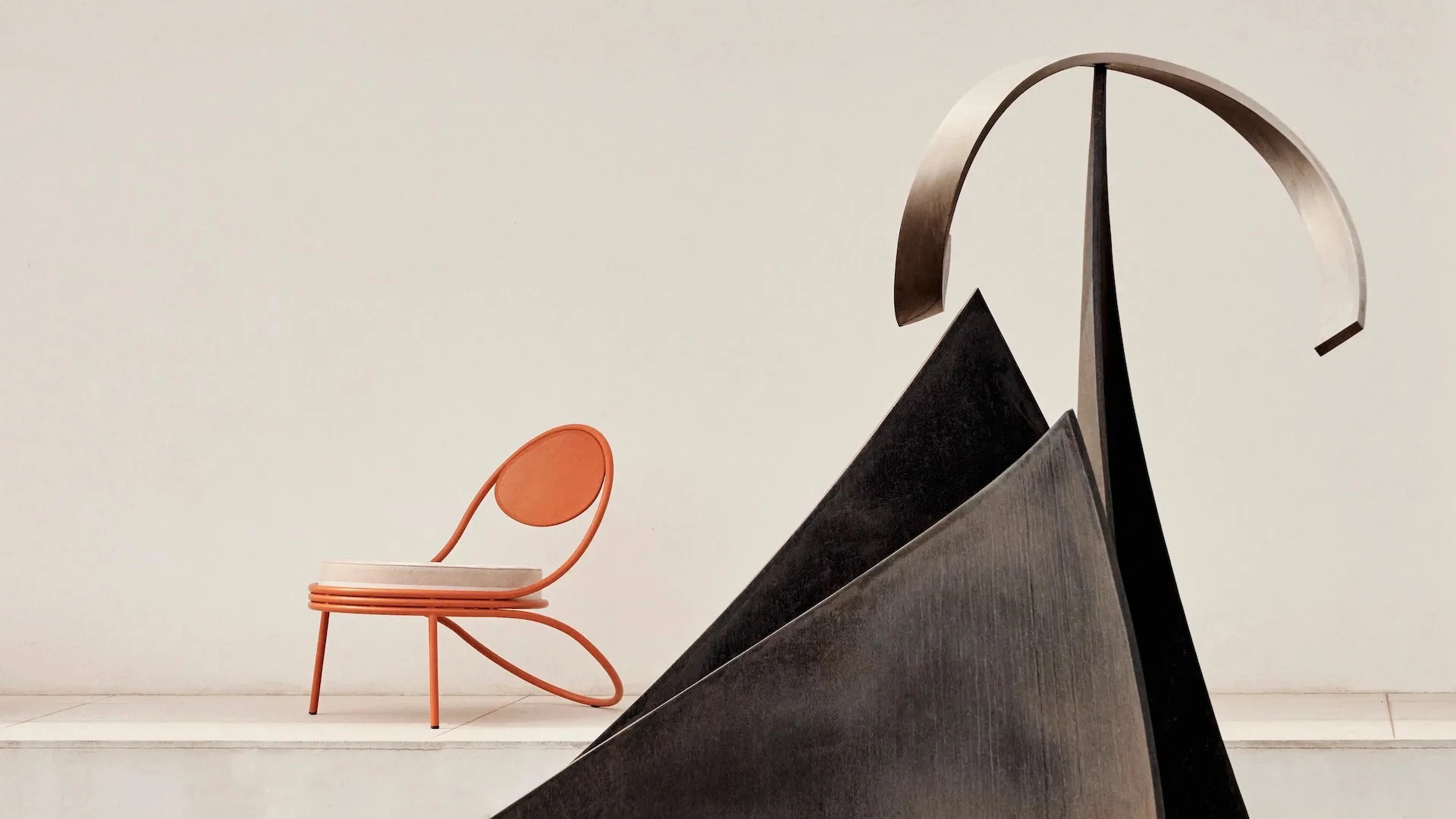
Matégot applied his inventive approach and signature material across a range of household objects, from fruit bowls, lamps, and coat racks to an extensive furniture collection including drinks trolleys and two inspired interlocking shelving systems. His three-legged Nagasaki Chair (1954) and his Copacabana Lounge Chair (1955), both made of steel tube and perforated sheet metal, are now held in the design collections at Paris’ Musée des Arts Décoratifs and Centre Georges Pompidou respectively.
METAL-PIONEERING MODERNIST
Like fabric, Rigitulle can be bent, folded, and shaped, giving the furniture and home accessories he designed transparency, weightlessness, and enduring modernity. Matégot patented this material and technique and set up his own production so that he could apply it to his designs.
Like many of his peers, Matégot traveled the world in search of inspiration and, upon his return, transformed the industrial processes and aesthetic impressions he had collected into his own unique designs and interpretations. Throughout the 1950s, he devoted himself to the design of furniture and interior accessories, creating an impressive array of distinctive furniture and home accessory designs that still resonate with contemporary audiences and are now considered iconic.