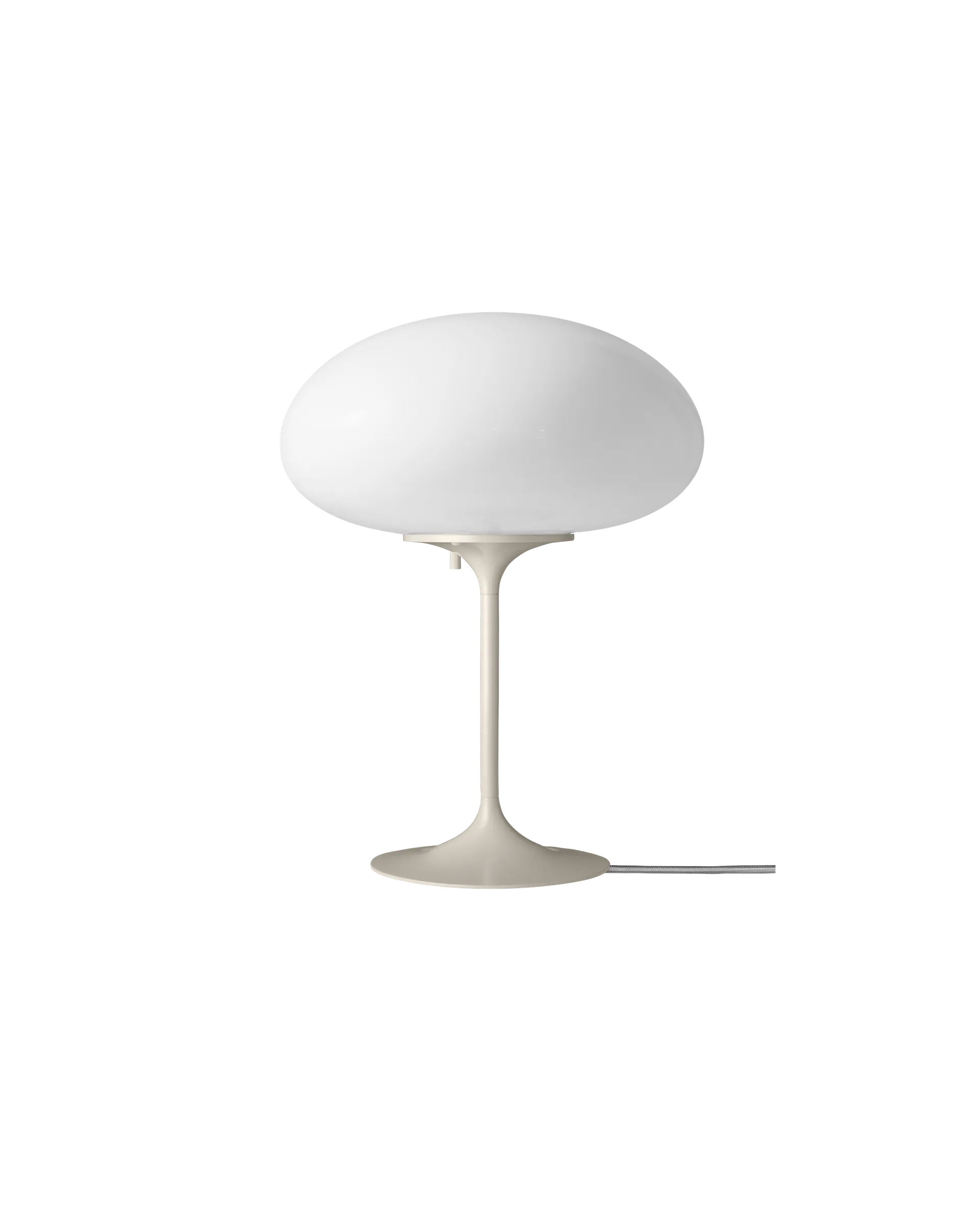
Stemlite Table Lamp
Design by Bill CurryThe Stemlite (1962) was the first ‘total look’ lamp, a pioneering new typology conceived by American Designer Bill Curry, which replaced the traditional base-plus-shade form with a single self-contained unit comprising interchangeable modules. His debut design, the much-emulated Stemlite, was named “most influential lamp of the year” by Industrial Design Magazine in 1965, used on the set of the original Star Trek TV series, and remained in production until 1977. Now remastered by GUBI after almost half a century, the new collection comprises two table lamps, two floor lamps and a new pendant – a simple inversion of the original design – in a contemporary yet authentic color palette. Today’s Stemlite remains true to Curry’s designs, comprising three of the original heights: two table heights, one of which was originally conceived as a floor lamp and the original floor lamp height. A second, taller floor lamp has been added and a pendant light has been engineered by simply flipping the original design upside-down, as well as a wall lamp. A counterweight has been hidden in the negative space created by the geometry of the foot of the upright lamps to meet contemporary safety requirements regarding stability and versions of the floor and pendant lights with new larger globes are also available.

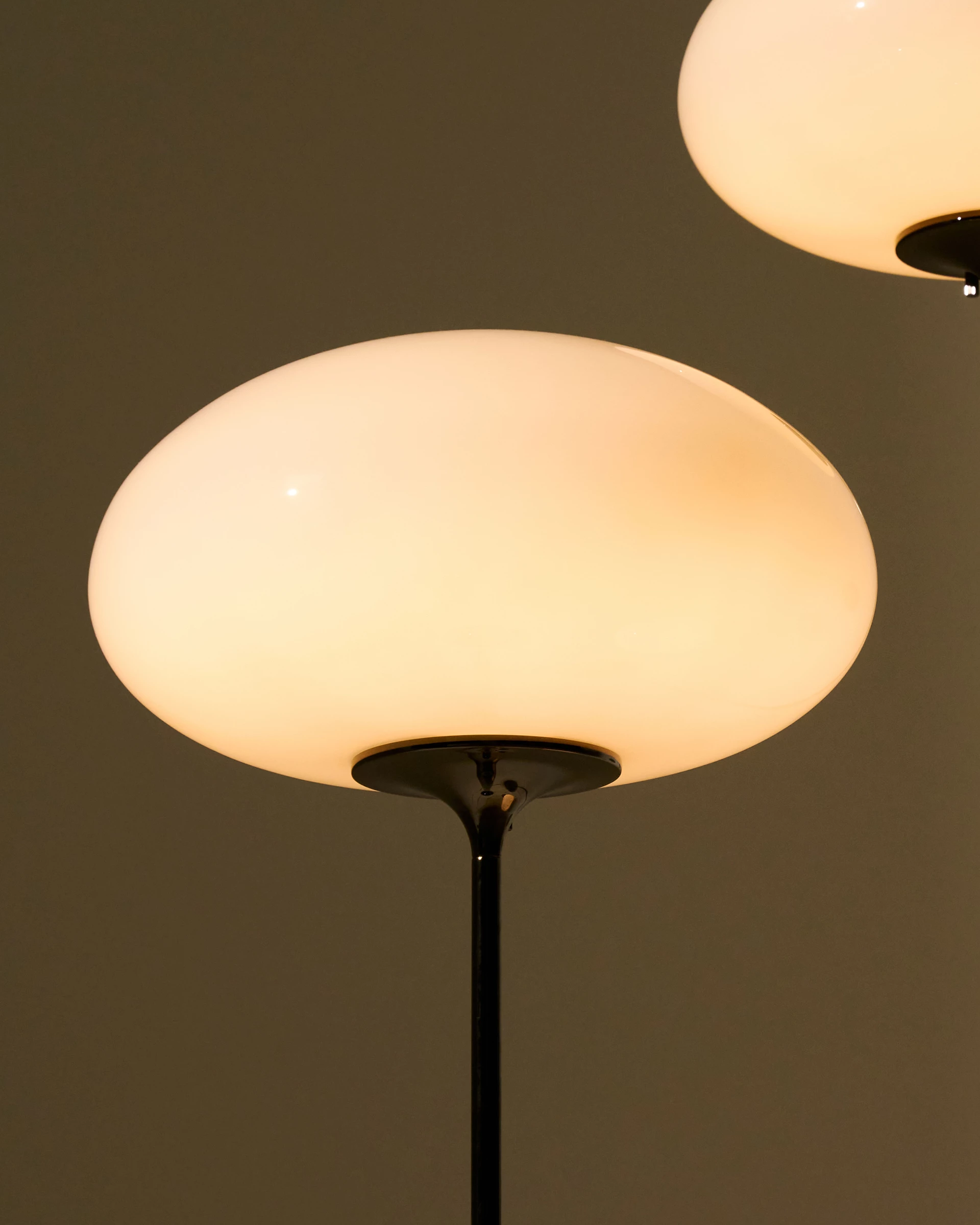
Opal glass was central to Bill Curry’s vision for Stemlite. Chosen for its smooth surface and balanced light diffusion, it gives the lamp a distinctive, refined presence. The glossy finish reflects its surroundings with gentle softness when unlit, and transforms when illuminated, diffusing light evenly across the globe.
BILL CURRY
American designer Bill Curry (1927-1971) captured the zeitgeist of the 1960s and ‘70s with his iconic lamp designs. From his unique Los Angeles vantage point at the meeting point of art, design and engineering, during an era defined by the space race, pop culture and a new forward-looking optimism, he translated the wonder and delight he saw around him into simple yet intelligent ideas with clear visual narratives.