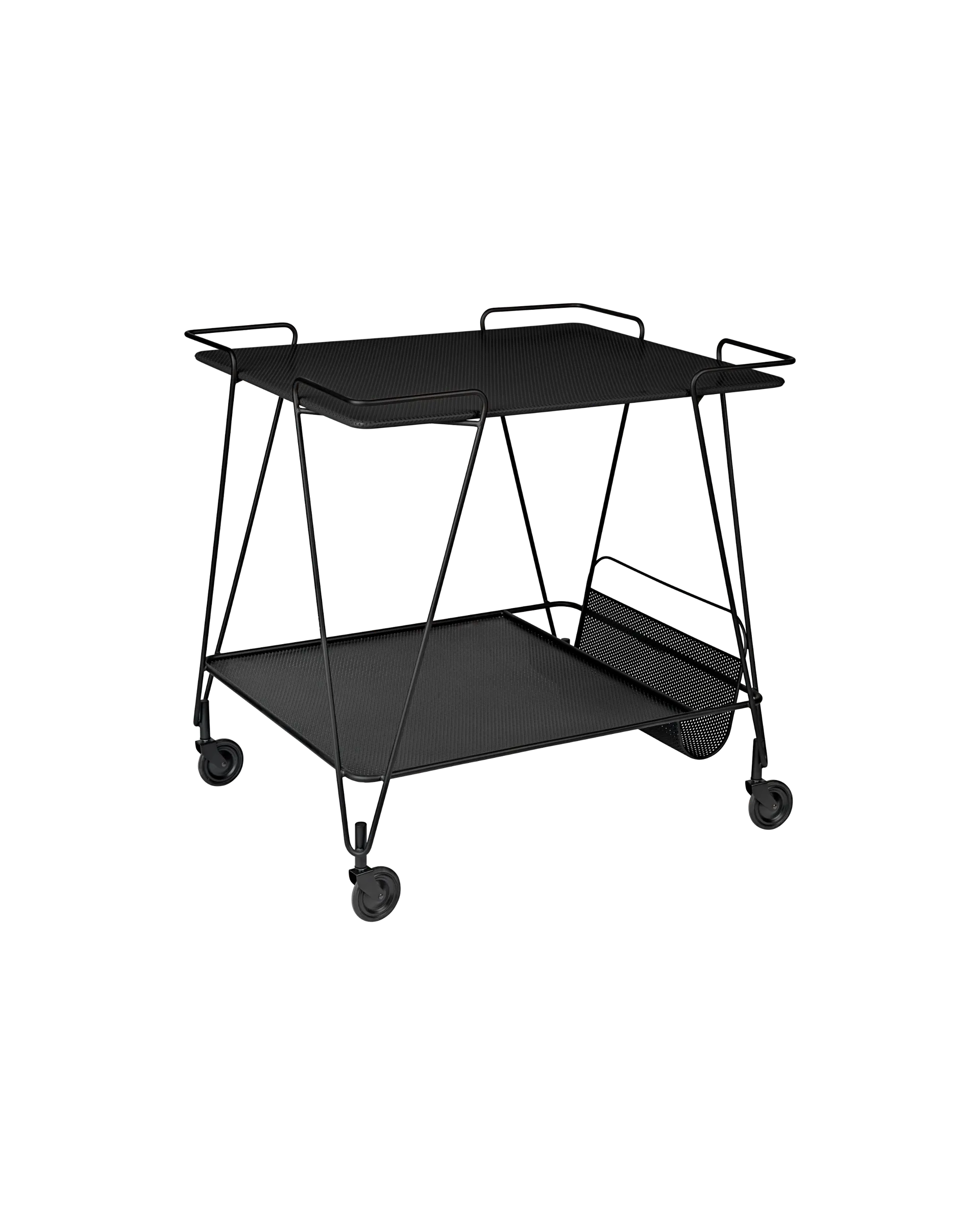
Matégot Trolley
Design by Mathieu MatégotThe spacious Matégot Trolley is adorned with two trays, both ind black and the lower includes a newspaper holder that proves, with its bent metal design, the technique's strength of being flexible as tulle and strong as metal. The lightness it evokes is improved by its rolling castors and makes it float along the floor.
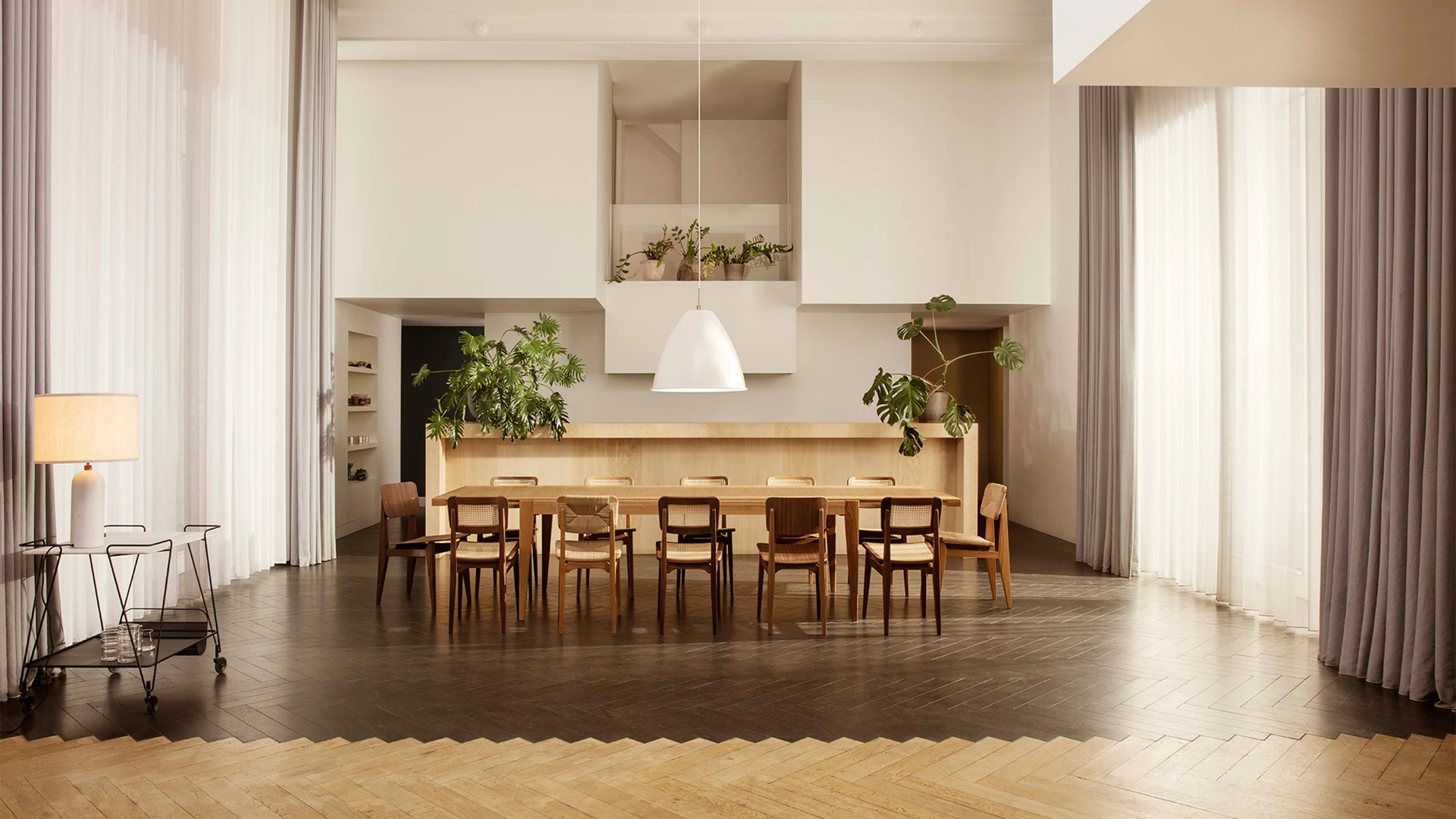
The master and founder of the innovative and groundbreaking technique Rigitulle, where perforated metal is combined with metal tubing, Mathieu Matégot, designed his tea trolley between 1953 and 1954.
MATHIEU MATÉGOT
Mathieu Matégot (1910-2001) was a versatile, independent, and self-taught Hungarian designer, architect and artist. He spent most of his life in his beloved Paris, where he settled in 1931 after traveling to Italy and the United States, studying at Budapest’s School of Art and Architecture, and gaining experience in set design, window dressing, fashion, and tapestry. In 1939, Matégot volunteered for the French army but was captured and held prisoner in Germany until his escape in 1944. Matégot’s wartime captivity was important to his later career, as it was here that he first learned about the techniques and potential of sheet metal while working in a mechanical accessories plant.