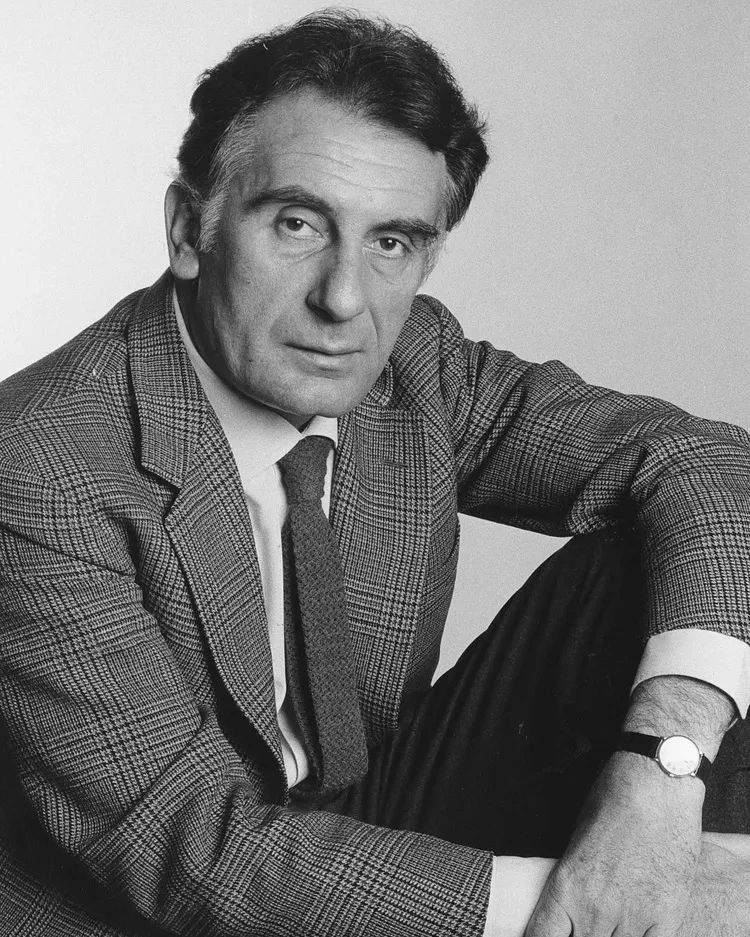
GIANFRANCO FRATTINI
Gianfranco Frattini was born in Padua in 1926 to a Milanese lawyer and the scion of a prominent Bergamo family. While he was still very young, they moved back to Milan - a city with which Frattini would be intimately associated for the rest of his life. He earned an architecture degree from the Politecnico di Milano in 1953, joining the cohort of polymath Milanese architects and designers who would drive the post-war renaissance of Italian design.
MEMORIES OF YOUTH
Gianfranco Frattini was born in Padua in 1926 to a Milanese lawyer and the scion of a prominent Bergamo family. While he was still very young, they moved back to Milan - a city with which Frattini would be intimately associated for the rest of his life. He earned an architecture degree from the Politecnico di Milano in 1953, joining the cohort of polymath Milanese architects and designers who would drive the post-war renaissance of Italian design.
CREATIVE ALCHEMY
Shortly before graduating, Frattini joined the practice of his former professor, the legendary architect Gio Ponti, the figurehead behind the ‘Made in Italy’ movement. It was through Ponti’s studio that Frattini met the likes of Le Corbusier, Oscar Niemeyer, and Cesare Cassina, the latter of which became a lifelong friend and collaborator. Indeed, when a lounge chair prototype that Frattini had created for a competition failed to win, it was Cassina who encouraged him to put it into production anyway - the first of many Frattini pieces produced for Cassina over the decades that followed.
DESIGNING THE '70S
Attention to the ceiling went hand in hand with a fascination for light - Frattini was acutely aware of the power of light to transform a space and make or break the aesthetic success of an interior. He became close friends with the great Italian lighting designer Livio Castiglioni, and together they created the iconic Boalum lamp in 1970 - a flexible illuminated strip of tubing that could be coiled, draped, or even knotted - inspired by the hose of a pool cleaner. Boalum wasn’t the only major Frattini work to emerge in 1970. That same year, he created the Sesann sofa, weaving together a tubular steel structure and luxurious cushioning to create a design that both deconstructed and perfected the sofa as a furniture form.