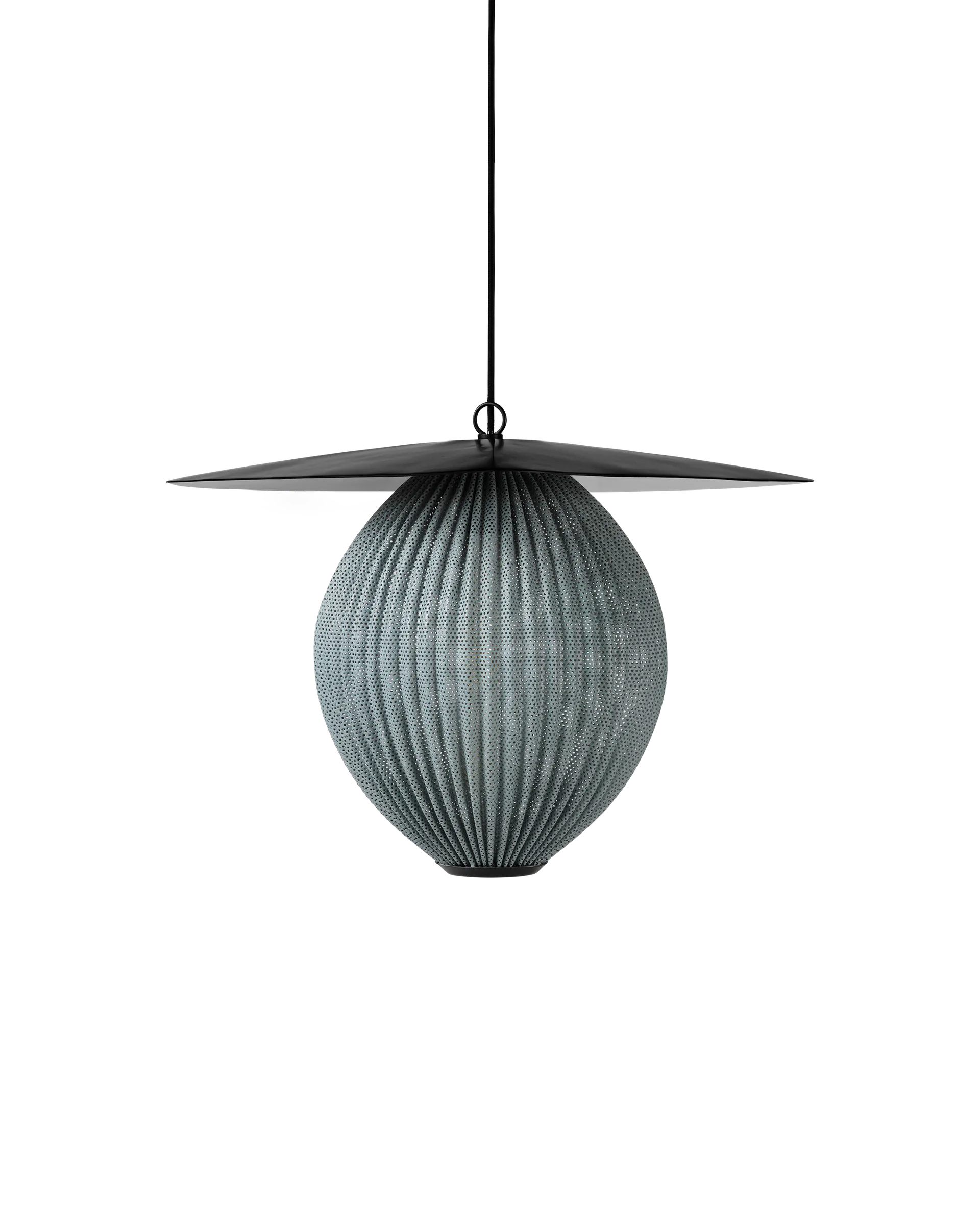
Satellite Pendant
Design by Mathieu MatégotThe Satellite Pendant of two sizes is designed by Mathieu Matégot in 1953 with geometrical shapes and an organic shade to create outstanding sculptural aesthetics. The name, Satellite, was given by Matégot as a wink and tribute to the scientific progress in France in the years after the Second World War. The Satellite Pendant holds the distinctive trait of Rigitulle, a technique and material invented by the designer himself that makes it possible to bend and fold the fabric-like metal sheet to an original, oblong-shaped pendant lamp. The lampshade has five colour options; midnight black, white cloud, shy cherry, venetian gold and rainy grey, and is unique with its bulb all covered by perforated metal to exude an atmospheric light - creating a festive appearance. The interplay of light and shadow cast on walls and floors generate a dramatic feature in any dining room, hallway or restaurant. Hang the Satellite Pendant alone as a character piece or in multiples to create a cloud of luminosity.
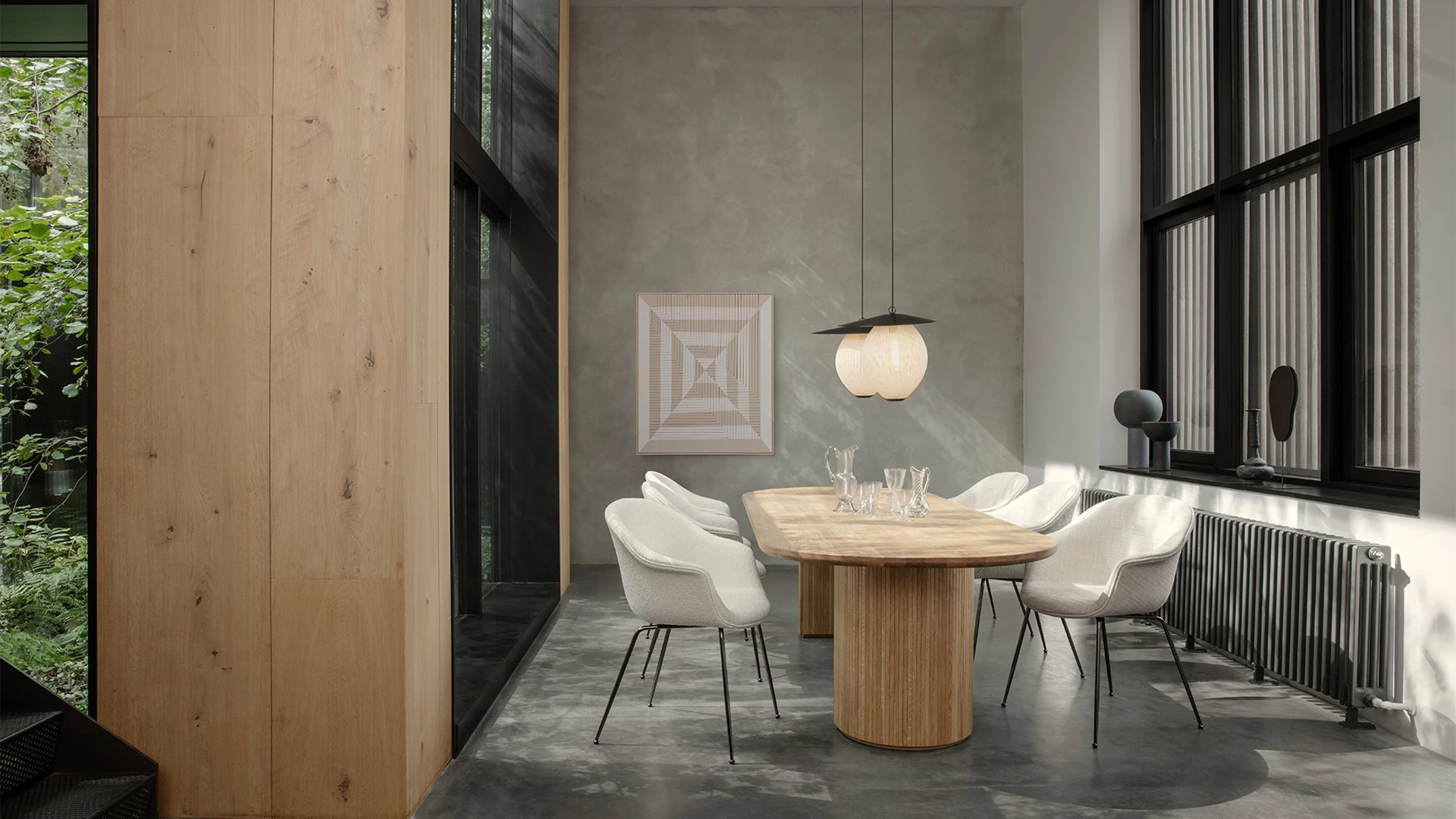
The Satellite Pendant of two sizes is designed by Mathieu Matégot in 1953 with geometrical shapes and an organic shade to create outstanding sculptural aesthetics. The name, Satellite, was given by Matégot as a wink and tribute to the scientific progress in France in the years after the Second World War. The Satellite Pendant holds the distinctive trait of Rigitulle, a technique and material invented by the designer himself that makes it possible to bend and fold the fabric-like metal sheet to an original, oblong-shaped pendant lamp. The lampshade has five colour options; midnight black, white cloud, shy cherry, venetian gold and rainy grey, and is unique with its bulb all covered by perforated metal to exude an atmospheric light - creating a festive appearance. The interplay of light and shadow cast on walls and floors generate a dramatic feature in any dining room, hallway or restaurant. Hang the Satellite Pendant alone as a character piece or in multiples to create a cloud of luminosity.
MATHIEU MATÉGOT
Mathieu Matégot (1910-2001) was a versatile, independent, and self-taught Hungarian designer, architect and artist. He spent most of his life in his beloved Paris, where he settled in 1931 after traveling to Italy and the United States, studying at Budapest’s School of Art and Architecture, and gaining experience in set design, window dressing, fashion, and tapestry. In 1939, Matégot volunteered for the French army but was captured and held prisoner in Germany until his escape in 1944. Matégot’s wartime captivity was important to his later career, as it was here that he first learned about the techniques and potential of sheet metal while working in a mechanical accessories plant.