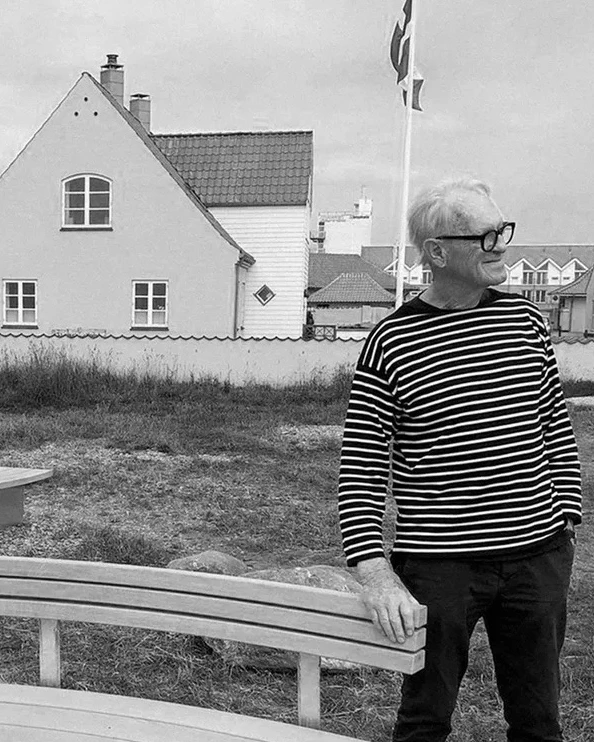
Rainer Daumiller
Born in 1939 in Oberlenningen - a small mountain village in southern Germany - Rainer Daumiller was a child of the Second World War. Food was in short supply and gathering fruit and berries was commonplace. It was this early reliance on his environment that gave Daumiller his affinity with nature - a relationship that influenced his later career as a designer.
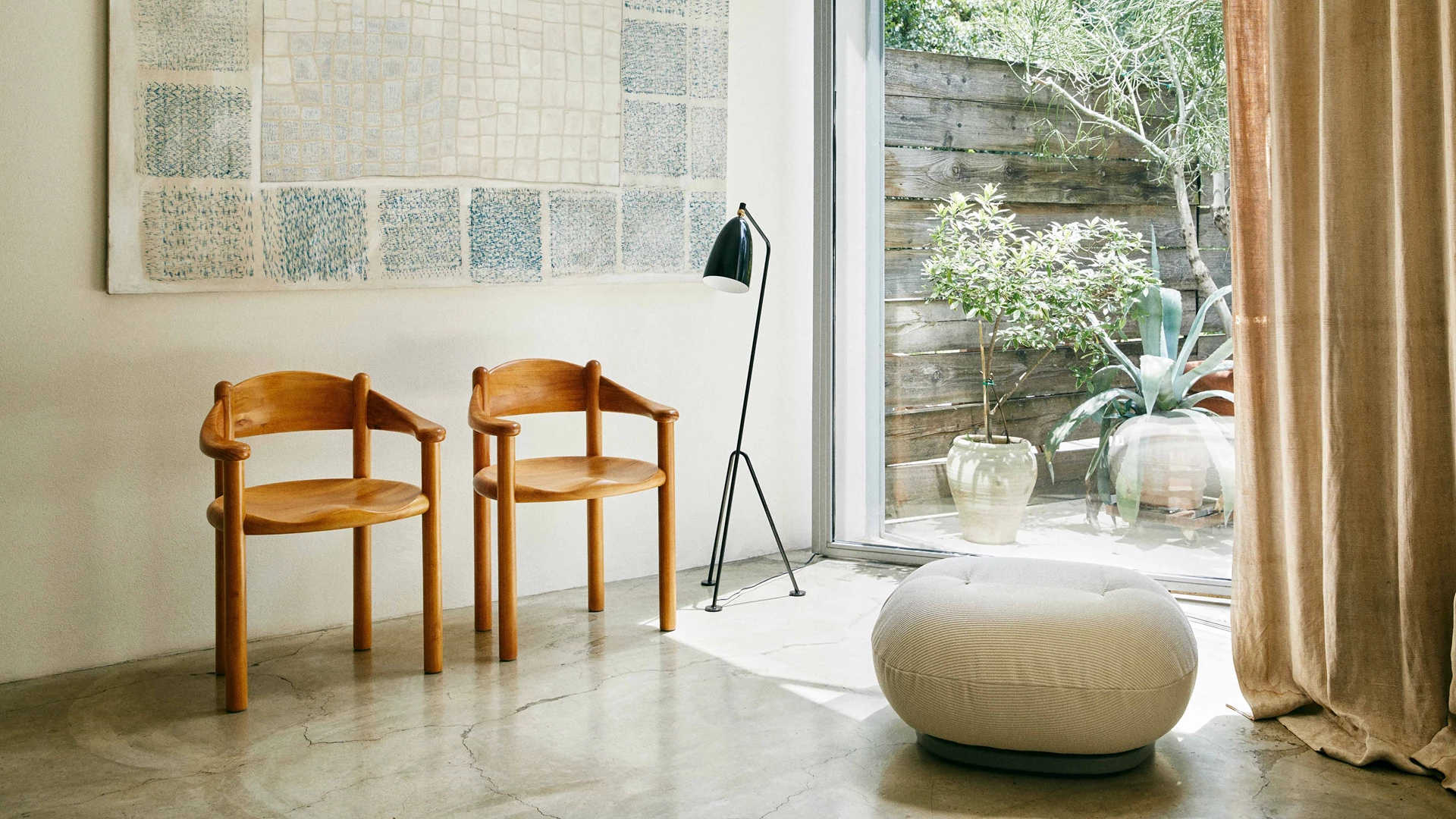
Daumiller has always been drawn to sustainability and simplicity, in both his life and his work. The robust, sculptural forms of his designs pay testament to a lifelong love of the natural world, and an intuitive material understanding – the ability to take what’s there, respond to its inherent properties, and create something special, whether he is foraging for food or designing a piece of furniture.
THE EARLY YEARS
Daumiller started designing furniture while at elementary school. Together with a friend, he designed a desk and a wardrobe. Additional learning came via the philosophy of Austrian philosopher, social reformer, and architect Rudolf Steiner and a weekly visit from a teacher from the Waldorf School in Stuttgart. He taught how to form objects from seemingly random pieces of wood, based on what each specific piece suggested to them. This approach shaped Daumiller’s instinct for listening to materials and allowing their natural characteristics to shape the design. After such eclectic and intuitive training, the piecework available within the factory after completion of his apprenticeship seemed monotonous by comparison. In 1959, he moved to Denmark and still thirsty for knowledge, applied for the Artisan School’s (Kunstværkerhåndskolen) Furniture Department. He joined what would later be called the Design School (Designskolen) in 1960.
A WELCOMING CHANGE
After exhibiting the pieces at the Bella Center exhibition venue in 1977, Hirtshals Sawmill (Savværk) produced the chairs and table for almost 25 years, supplying them to Danish stores in Germany, Austria, Switzerland, the Netherlands, Norway and Japan.
The pine Daumiller specified came as a welcome change after many years of furniture dominated by teak and rosewood and was in tune with increased awareness of sustainability and the need to carefully manage rainforests. His bestselling piece, however, remains his pine armchair – a trademark of Hirtshals Møbelfabrik for over two decades.